
This website uses affiliate links which may earn a commission at no additional cost to you. As an Amazon Associate I earn from qualifying purchases.
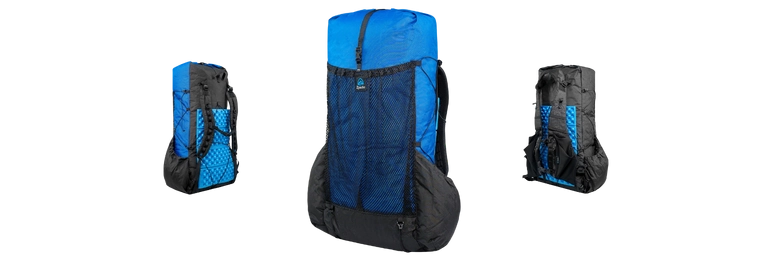
The Zpacks Super Nero Ultra 50L is a frameless backpack that weighs as little as 10.55 ounces in its lightest configuration. That number is not a typo. This is a pack that can hold 50 liters of gear and weighs less than a can of soup.
But here is what that number means in practice: this pack is designed for hikers who have already committed to extreme ultralight backpacking. The Super Nero will perform best when total pack weight is below 18 pounds, with a maximum recommended load of 20 pounds. If you are carrying 25 pounds or more, this is not your pack. Your shoulders will tell you why by mile 10.
If you are planning your first thru-hike and your base weight is above 10 pounds, you need to understand that this pack will not accommodate traditional backpacking gear. The Super Nero rewards commitment to ultralight philosophy. It punishes everything else.
The Weight Mathematics
Eleven ounces. With features maxed out, the Super Nero weighs between 12.1 and 20.6 ounces depending on configuration. To put this in perspective, most traditional thru-hiking packs weigh between 40 and 60 ounces.
On a 2,000-mile thru-hike, saving two pounds on your pack translates to lifting roughly 4,000 fewer pounds over the entire journey. That is the appeal. But the math only works if your entire system is dialed in.
Most hikers will need a sub-9-pound base weight for longer trips to stay within the Super Nero’s comfortable carrying range. That means an ultralight shelter under 2 pounds, a quilt instead of a sleeping bag, a minimal cook system, and ruthless elimination of anything that does not earn its place in your pack.
The pack itself saves weight by eliminating structure. There is no frame. There is minimal padding. The hip belt is optional and when included, it is just webbing. Every ounce saved on the pack means an ounce your shoulders must manage directly when you add gear.
Volume: 50 Liters Explained
The Super Nero advertises 50 liters of capacity, but the main body internal volume is 37 liters, with the remaining 13 liters coming from side bottle pockets and the front mesh pocket.
In practical terms, 37 liters in the main compartment plus two large water bottle pockets that fit Nalgene bottles or two Smart Water bottles, and a huge mesh front pocket means you can fit a 20-degree quilt, a tarp or ultralight tent, insulated layers, rain gear, a cook system, and several days of food.
The extra volume compared to smaller ultralight packs makes the Super Nero particularly useful for bulky but light gear. The pack is optimized for carrying ultralight but bulky loads, including a hammock sleep system or a synthetic insulated backpacking quilt. If you are carrying a hammock with an underquilt and top quilt, or a synthetic quilt that performs better uncompressed, the 50L capacity lets you pack these items loosely without fighting the pack closure.
Food carries matter with any pack, but especially with frameless designs. With the Super Nero, you can handle week-long food carries if your food is calorie-dense and packs efficiently. Bulky items like full-size bags of chips or loaves of bread will eat into your available space quickly. Plan your resupply strategy around compact, high-calorie foods.
The pack also features exterior attachment points and compression straps for everything from trekking poles to folding foam pads to bear canisters, plus bottom cords that offer a place to lash a folding foam pad.
Interchangeable Strap Systems: The Defining Feature
The Super Nero’s signature feature is its interchangeable strap design allowing you to pick between Standard S Straps, Small/Women’s Straps, or Vest Style Straps with integrated water bottle pockets. This is not a minor customization option. The strap system you choose fundamentally changes your relationship with this pack.
Standard Straps: Traditional Simplicity
Standard straps work like every backpack you have used before. They attach to the pack body, rest on your shoulders, and you adjust them for fit. The benefit is straightforward reliability. There are fewer adjustment points, less complexity, and less that can go wrong.
For thru-hikers who prefer simplicity, who do not need constant access to snacks and gear while moving, or who find chest pressure uncomfortable, standard straps are the answer. Standard straps were perfectly adequate for super light loads and casual day hiking, but they concentrate all pack weight on your shoulders with minimal distribution elsewhere.
Standard straps weigh 342 grams (12.1 ounces) for the complete pack.
Vest Straps: Accessibility and Distribution
Vest-style straps wrap around your torso like a running vest with integrated water bottle pockets in the chest area. The vest straps are connected with a yoke that runs along the top of your back below your neck when worn, keeping the width between shoulder straps fixed so they do not slide off the sides of your shoulders.
The advantages are significant for certain hiking styles. You can keep your office (maps, phone) and kitchen (snacks, water) easily accessible without having to stop to dig stuff out of your backpack. The vest also helps distribute some load, particularly water weight, to the front of your torso, improving balance on rocky scrambles and helping maintain momentum when climbing.
The Super Nero’s vest strap pockets are considered best-in-class, offering 50 to 100 percent more storage space than competing options when used in conjunction with optional hip belt pockets.
For hikers who graze on snacks throughout the day rather than taking meal breaks, who need frequent access to navigation tools, or who carry substantial water weight, vest straps transform the hiking experience. You can grab a bar, check your phone, or take a drink without breaking stride.
The trade-off: vest straps weigh 449 grams (15.8 ounces) for the complete pack, adding about 3.7 ounces compared to standard straps. They also require more precise fitting. The chest pressure may be uncomfortable for some hikers, particularly on steep climbs when breathing hard. Despite the weight redistribution, you are still limited to a 20-pound maximum comfortable carry since the Super Nero is frameless.
Making the Choice
Strap systems can be swapped, but this is not something you do casually on trail. The systems are sold separately and changing them requires removing hardware. You are making a commitment when you choose.
For beginners, this represents a gamble. If you have never used vest-style straps on a multi-day trip, you do not know if the accessibility is worth the added complexity and chest pressure. Some experienced reviewers preferred the heavier but more featured vest straps for solo backpacking, finding they carried and distributed pack weight better than standard straps.
Consider your hiking style. If you stop for breaks regularly and do not mind taking your pack off to access gear, standard straps offer proven simplicity. If you prefer continuous forward movement with constant grazing and minimal stops, vest straps might justify their complexity.
Durability: Ultra 100X Fabric in Real Conditions
The Super Nero is constructed from Ultra 100X fabric, which features a woven Ultra High Molecular Weight Polyethylene (UHMWPE) face fabric laminated to a waterproof backing. This material is extremely abrasion and tear resistant and is the strongest fabric Zpacks offers.
The pack material is waterproof with all seams and attachment points taped, constructed using hydrophobic thread, making the pack highly water resistant. However, Zpacks still suggests using dry bags or a pack liner to protect important items like clothing and sleeping bags, particularly if the pack is submerged or exposed to prolonged periods of heavy rain.
In wet weather, the Super Nero performs well. The material is waterproof on its own plus the bag seams are taped for extra protection. Rain runs off. Snow brushes off. You can set the pack down in wet conditions without soaking your gear. The fabric does not absorb water, so there is no added weight from moisture.
For abrasion resistance, the material is super strong and should stand up to dragging through brambles, scraping over rocks, or catching on tree branches without concern. Even the mesh pocket seems fairly difficult to rip and should stand up to rugged use since it is not stretchy, which often makes materials less resistant to tearing.
One practical consideration: Ultra fabric is not coated with DWR or other chemicals and is PFAS free, which appeals to environmentally conscious hikers.
The bottom line on durability: this pack will survive a thru-hike. It may show wear, particularly on stress points like the bottom panel if you repeatedly set it down hard on rough surfaces, but the fabric does not fail catastrophically. Small issues can be repaired with tape. Most hikers complete long trails with their Super Nero intact and functional.
Access and Organization: Minimalist by Design
The Super Nero follows a minimalist organizational philosophy. You get one main compartment with a roll-top closure. The pack features a roll-top closure with a stiffened opening which allows you to compress the top of your pack as your gear load shrinks.
There is no brain pocket, no bottom access, no internal dividers. There is a huge mesh pocket on the front that is a great place to store quick-grab items or clothing that needs to dry, and side pockets sized to fit 1 or 1.5 liter bottles, positioned low on the pack and slanted forward for easy access without removing the pack, with drainage holes at the bottom and elastic that keeps them tight at the top.
At 9 PM when you are exhausted and it is raining, you need your shelter and sleep system. With the Super Nero, everything is in one bag accessed from the top. If you packed poorly that morning and your shelter is at the bottom, you are unpacking in the rain.
Smart hikers develop a system. Shelter and stakes go in an exterior pocket or at the very top of the main compartment for quick access. Your sleeping quilt goes in next. Heavy items like food and water sit close to your back for better load distribution. Items you need during the day either stay near the top or go in exterior pockets.
The strap system dramatically affects daily access. With vest straps, you have chest pockets for snacks, phone, map, sunscreen, and lip balm. You can hike for hours without opening the main pack. With standard straps, you either stop and remove the pack or you accept limited access to gear while moving.
The Super Nero includes a closed cell foam sit pad measuring 11 by 15.5 inches, adding 1 ounce to total weight, which provides cushion and support against your back and is held in place with shock cord. The sit pad is removable for breaks.
Comfort Under Load: Frameless Reality
Being frameless, the Super Nero’s comfort depends entirely on how much weight you are carrying. The pack has a maximum recommended load of 20 pounds, though it performs best when total pack weight is below 18 pounds.
At 15 pounds total pack weight (gear, food, and water), the Super Nero essentially disappears. Your shoulders carry the load comfortably. You can hike all day without significant pressure points or discomfort. The minimalist design stops feeling like a compromise and starts feeling like liberation.
At 20 pounds, you are at the upper limit. By the end of a 20-mile day, your shoulders will be tired. The simple webbing hip belt transfers minimal weight. Everything rides on your shoulders and back.
Above 20 pounds, your shoulders will eventually get sore, not because the pack will fail or rip, but because of the comfort limitations of frameless designs. If you know you will regularly exceed 20 pounds (winter gear, longer food carries, bulky photography equipment), consider framed packs instead.
The strap system affects load comfort. Vest straps distribute weight better and provide more stability for steep, technical hiking, with double sternum straps helping keep the weight in place without needing a hip belt. Standard straps concentrate everything on your shoulders with less distribution across your torso.
Your body adapts over weeks on trail. Hikers who start a thru-hike with the Super Nero often struggle for the first few weeks. By week six, their shoulders have strengthened, their technique has improved, and they have likely shed a few pounds from their base weight through gear shakeouts. The pack feels better because they have become ultralight hikers.
Practical Scenarios: How the Super Nero Performs When It Matters
Setting up camp at 9 PM in the rain: You are exhausted, it is dark, and it is pouring. You need your shelter immediately. With the Super Nero, your shelter location in the pack determines your experience. If it is in an exterior pocket or at the top of the main compartment, you are set up in minutes. If you packed poorly and it is buried under everything else, you are digging through the entire pack in the rain with cold hands. The roll-top closure has to be opened and closed, exposing gear to moisture each time.
Grabbing snacks on the move: This is where strap choice makes the biggest difference. With vest straps and their integrated water bottle pockets, you can snack continuously without breaking stride. Pull out a bar, eat, stuff the wrapper back. Over a five-month thru-hike, this efficiency adds up. With standard straps, you either stop and remove your pack or you wait until your next break. Some hikers do not mind stopping. Others find it breaks their rhythm.
Town stops and hitching: The Super Nero does not scream “thru-hiker” the way a massive 65-liter pack does. It looks more like a daypack that happens to be full. This can be helpful when hitching. You appear less intimidating to drivers. The pack also fits easily in car trunks and takes up minimal space in hotel rooms.
Cold weather and numb fingers: At the end of a freezing day, manipulating the roll-top closure with cold, numb fingers can be frustrating. There is no quick-access zippered compartment for your down jacket or gloves. Everything comes through the top. Some hikers add exterior pockets or develop systems to keep frequently needed cold-weather items accessible.
Bear bag hanging and camp organization: The pack includes a removable folding foam seat pad that provides some back support while worn and serves as a camp seat. Because the pack is frameless, it collapses when empty. It will not stand upright on its own at camp. You cannot set it down and have it stay open while you organize gear. It flops over. Some hikers find this annoying. Others barely notice and appreciate that the collapsed pack packs down small for zeros or when shipping it ahead.
The Beginner Decision: Is This Your Pack?
The Super Nero is rarely a first pack. This pack is a cutting-edge companion for super ultralight hikers of the world, typically purchased by hikers who have already completed shorter trips with lighter gear and know their system works.
Ask yourself these questions:
Is your base weight below 10 pounds? If not, work on reducing your gear weight first. The Super Nero rewards ultralight systems, not aspirational purchases.
Have you tested your ultralight gear on shorter trips? Do you know you can be comfortable with a minimalist shelter, a quilt instead of a sleeping bag, and stripped-down essentials?
Are you comfortable with limited organization and access? The single-compartment design is not for everyone. If you like zippered pockets, internal organization, and quick access to multiple items, this pack will frustrate you.
Do you know which strap system suits your hiking style? If you have never used vest-style straps, you are taking a gamble. Standard straps are safer for beginners.
Price is a factor. The Super Nero costs several hundred dollars for what is essentially a minimalist bag with straps. You are paying for extreme light weight and premium materials. If those priorities do not match your needs, there are more forgiving options.
Alternatives Worth Considering
If the Super Nero appeals to you but you are not sure you are ready:
Gossamer Gear Kumo: Frameless pack at 28 ounces with more traditional features and organization. More forgiving for beginners.
ULA Ohm 2.0: Frameless option with more structure and padding than the Super Nero. Slightly heavier but more comfortable at higher loads.
Nashville Cutaway: Similar frameless ultralight philosophy with vest strap options. Comparable weight and capacity.
Hyperlite Mountain Gear 2400 Southwest: Slightly heavier at around 28 ounces but includes a frame and more structure for carrying heavier loads.
If load capacity is your priority over weight, consider packs like the Mountainsmith Zerk or Nashville Cutaway.
Final Assessment
The Zpacks Super Nero Ultra 50L is an exceptional pack for hikers who have committed to ultralight backpacking and understand what that commitment requires. At 11 to 16 ounces depending on configuration, it represents the cutting edge of lightweight pack design.
The Super Nero rewards:
- Ruthless gear discipline
- Sub-10-pound base weights
- Hikers who have tested their systems
- Those who value weight savings above all else
- Experience with minimalist gear
The Super Nero punishes:
- Traditional backpacking approaches
- Loads above 20 pounds
- Beginners still figuring out their gear
- Those who need structure and organization
- Hikers who have not tested ultralight systems
Choose your strap system carefully. Standard straps offer simplicity and proven reliability. Vest straps provide accessibility and better weight distribution but add complexity and require proper fit. You cannot easily change your mind once you are on trail.
If you are genuinely committed to ultralight hiking, have tested your gear on shorter trips, know your base weight is below 10 pounds, and understand the compromises involved, the Super Nero will serve you well for thousands of miles. It will never be the most comfortable pack or the most organized pack, but it will be among the lightest packs that can handle serious thru-hiking distances.
For beginners, the Super Nero represents a goal to work toward rather than a starting point. Build your ultralight system first. Test it thoroughly. Then, when you know you can thrive with minimal gear and frameless support, the Super Nero will be waiting.