
This website uses affiliate links which may earn a commission at no additional cost to you. As an Amazon Associate I earn from qualifying purchases.
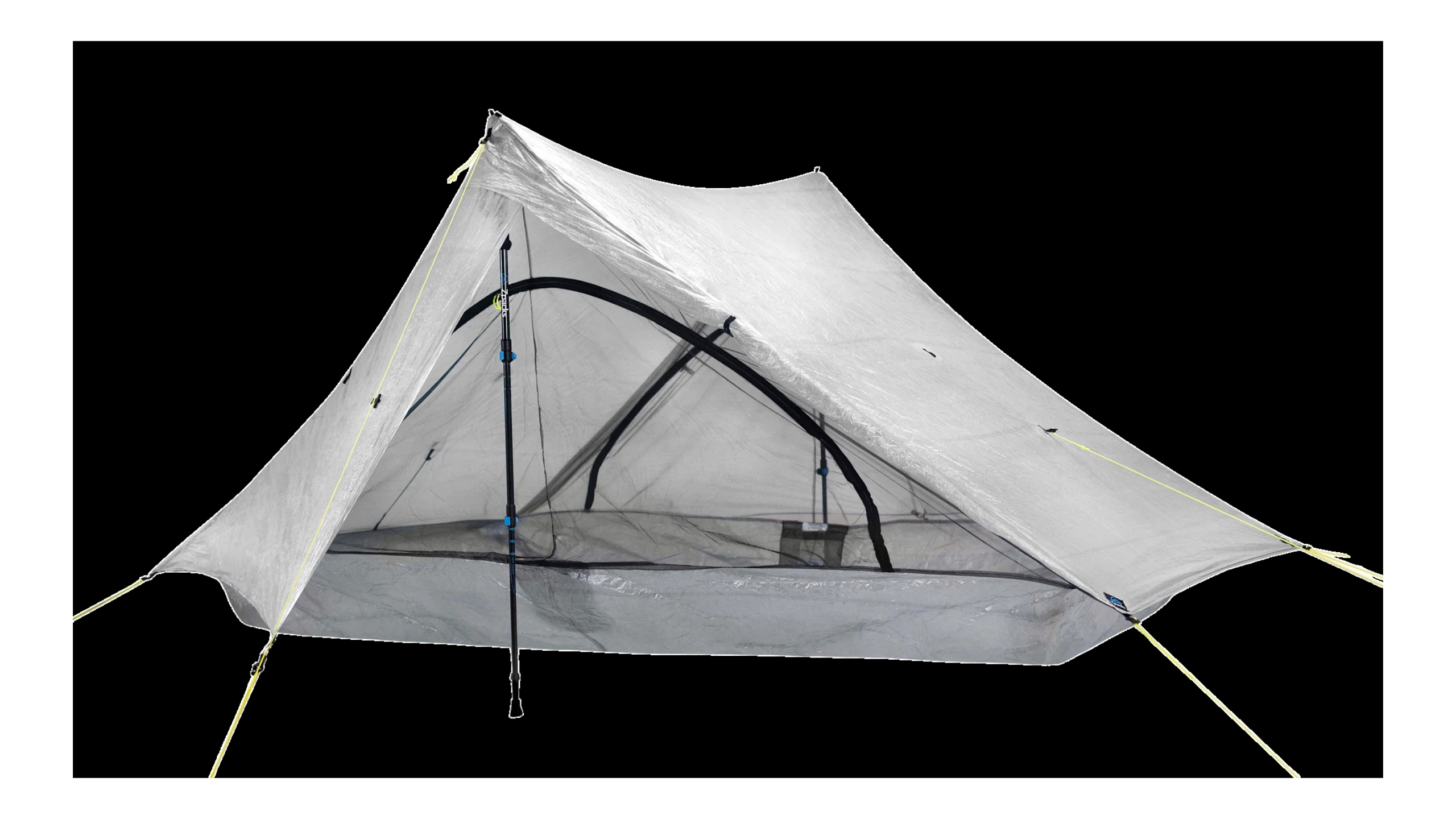
The Zpacks Duplex Classic has earned legendary status on long-distance trails, it was voted the most popular ultralight tent by Appalachian Trail thru-hikers two years running. But does this premium shelter live up to the hype for beginners just getting into thru-hiking? Let’s break down everything you need to know.
Specs at a Glance
| Specification | Details |
|---|---|
| Weight (trail) | 17.9 – 18.9 oz (525g) with stuff sack, excluding stakes/poles (Varies By Color) |
| Capacity | 2 person |
| Floor Dimensions | 45″ × 90″ (114cm × 229cm) |
| Peak Height | 48″ (122cm) |
| Floor Area | 28.1 sq ft (2.6 sq m) |
| Packed Size | 7″ diameter × 13″ tall (stuff sack) |
| Price | $699 |
| Setup Type | Trekking pole supported (non-freestanding) |
Who It’s For
Ideal for: Ultralight backpackers and thru-hikers who prioritize weight savings and already use trekking poles. Solo hikers wanting luxury space or couples comfortable with cozy quarters.
Best conditions: Three-season use from spring through fall. Excels in moderate rain, wind, and bug pressure. Handles high-elevation weather surprisingly well for its weight.
Skill level: Intermediate to advanced. While the setup becomes intuitive quickly, beginners accustomed to freestanding tents will face a learning curve. First-time trekking pole tent users should practice at home before hitting the trail.
Setup & Pitch
The Duplex uses a classic A-frame design requiring two 48″ trekking poles (or optional carbon fiber tent poles at $35 each) and 6-8 stakes. The symmetrical design is brilliantly simple, there’s no “front” or “back” to remember.
Setup time: 3-5 minutes once practiced (10-15 minutes your first few attempts)
The process: Stake four corners at 45-degree angles → insert poles at peaks → stake guy lines → adjust tension. The overlapping storm doors face into the wind for optimal protection.
Learning curve: Moderate. Unlike offset trekking pole designs that require mental gymnastics after a 20-mile day, the Duplex’s symmetry means less thinking. The pre-attached guylines with sewn linelocs make adjustments straightforward. However, achieving a taut pitch takes practice, slack corners or mispositioned stakes will leave wrinkles.
Site requirements: Small footprint (100″ × 93″ including vestibules) allows camping in tight spots where larger freestanding tents won’t fit. Works on various terrain but performs best on soft ground where stakes hold well.
Weather Protection
The Duplex sheds wind effectively, with multiple reviews noting impressive storm performance. The single-wall Dyneema Composite Fabric (DCF) construction is inherently waterproof, no DWR coating to wear out.
Rain: Taped seams and waterproof DCF mean zero leakage. The 8″ bathtub floor with canopy overhang prevents splash-up in most conditions. In heavy downpours on hard-packed ground, minor splash can occur, choose campsites with leaf litter or pine needles when possible.
Wind: The material can handle high wind loads as long as stakes stay in the ground. The low profile and A-frame geometry provide excellent stability. DCF doesn’t stretch when wet, so your pitch stays taut through the night.
Condensation: Single-wall tents are notorious for condensation, but the Duplex manages this better than expected. The overlapping storm doors allow constant airflow without rain entry. Full perimeter mesh netting enhances ventilation. In cold, humid conditions, expect some dampness on interior DCF surfaces, though it rarely drips.
Temperature range: Three-season rated. Gets drafty in cold weather due to storm door gaps. Not recommended for winter or snow camping without modifications.
Livability
Interior space: Surprisingly roomy for its weight class. The 45 × 75 inch floor is rectangular and not tapered at head or foot, giving more space for gear and making the shelter feel very spacious. Two people can sit upright side-by-side at the center, and 48″ peak height allows comfortable dressing.
Sleeping arrangement: Fits two standard-width sleeping pads (20-25″) comfortably. Two wide pads (25″+) would be tight. Many solo hikers use this as a spacious one-person palace, storing gear inside rather than in vestibules.
Entry/exit: Dual doors with rainbow zippers and drop-down mesh screens make entry smooth. Each person gets their own door, no crawling over your tentmate at midnight.
Vestibules: 24″ deep on each side provides adequate gear storage for packs and muddy boots. Not cavernous, but functional for keeping essential items dry and accessible.
Mesh pockets: Small pockets near each door hold phones, headlamps, and glasses. Accessible from inside or outside.
Headroom: Adequate for sitting but not standing. Taller hikers (6’2″+) fit fine lengthwise but should consider the DupleXL for extra room.
Durability & Materials
The Duplex uses waterproof Dyneema Composite Fabric with no DWR coating or treatments, it’s naturally waterproof and contains no PFCs, PFAS, or flame retardants.
Canopy fabric options:
- .55 oz/sqyd DCF (Blue/Olive): Lightest, more transparent
- .75 oz/sqyd DCF (Spruce Green): Heavier, more opacity and durability
Floor: 1 oz/sqyd DCF, reasonably durable but not bombproof
Longevity: Expected lifespan is at least one full 2500+ mile thru-hike or many years of casual use with care. Multiple reviewers report thousands of trail miles on their tents.
Weaknesses: DCF doesn’t stretch, making it more susceptible to punctures than nylon. Abrasion from rocks, twigs, and rough ground gradually weakens fabric. Not as durable as heavier ripstop tents.
Care requirements: Clear campsites of sharp objects before pitching. Consider a groundsheet (Tyvek or DCF) for added protection, especially on abrasive surfaces. Zpacks includes repair tape, and DCF patches well in the field.
Warranty: 2-year limited warranty against defects. Zpacks offers highly-reviewed repair services for damaged gear.
Weight Breakdown
Tent weight (as shipped): 18.5-19.4 oz depending on fabric choice
- Tent with guylines: 18.5 oz base
- Stuff sack: .32 oz
- Repair tape: .14 oz
- Spare zipper sliders: .16 oz
What’s NOT included:
- Stakes: 6-8 required (add 1-3 oz depending on stake type)
- Poles: Uses your trekking poles (0 oz if you already carry them) OR purchase carbon tent poles at 2.6 oz each (5.2 oz total)
Optional accessories:
- Groundsheet: 1-3 oz depending on material
- Freestanding Flex Kit: Converts to semi-freestanding (adds weight but worth it for platform camping)
Trail weight reality: Most hikers carry 20-22 oz total (tent + stakes) when using trekking poles. Still significantly lighter than comparable two-person tents.
Packability
Packed size is 6 inches in diameter by 12 inches long with a stuff sack that’s 7 inches diameter by 13 inches long. Volume is approximately 3.5-5.6 liters depending on how tightly rolled.
Pack placement: Fits easily inside most backpacks. Many hikers roll it loosely and let it compress naturally at the bottom of their pack. The generous stuff sack means no morning wrestling matches.
Compression: DCF doesn’t compress as small as nylon/silnylon but packs smaller than traditional double-wall tents with poles.
Travel tip: The tent can be split between partners, one carries the tent body, the other carries stakes and poles, distributing weight.
Value & Alternatives
Price: $670-$700 (Blue/Olive) to slightly more for Spruce Green. Not cheap, this is a significant investment for most beginners.
Cost per ounce of weight saved: Compared to a Big Agnes Copper Spur HV UL2 (3 lb 2 oz, ~$500), the Duplex saves about 25 oz for $170-200 more. That’s roughly $7-8 per ounce saved.
Comparable alternatives:
- TarpTent Double Rainbow Li (26.95 oz, ~$799): More heavy but arguably easier setup for beginners
- Hyperlight Mountain Gear Unbound 2P (22 oz, ~$699): Lighter floor space, higher price
- Durston X-Mid 2P (34 oz, ~$319): Heavier but half the price with similar livability
Best for: Weight-obsessed thru-hikers tackling 20+ mile days where every ounce matters. Those who already invested in ultralight gear systems and want a tent to match.
Skip if: You’re budget-conscious, prefer freestanding tents, need four-season capability, or camp primarily in established campgrounds where weight doesn’t matter.
Bottom Line
The Good:
- Exceptionally lightweight (among the lightest true two-person shelters)
- Spacious for its weight with excellent headroom
- Proven reliability over thousands of trail miles
- Simple, symmetrical setup once learned
- Superior weather resistance and ventilation
- Made in USA with PFAS-free materials
The Bad:
- Very expensive for beginners
- Learning curve for first-time trekking pole tent users
- Less durable than heavier fabrics, requires careful site selection
- Can be drafty in cold weather
- Single-wall condensation in humid conditions
- Semi-transparent fabric (limited privacy in bright daylight)
Who should buy it: Serious ultralight backpackers and thru-hikers who use trekking poles and have the budget for premium gear. Solo hikers wanting spacious comfort without weight penalty. Couples willing to accept cozy quarters for massive weight savings.
Who should skip it: Beginners still figuring out their backpacking style. Car campers and weekend warriors where weight isn’t critical. Those needing four-season capability or preferring freestanding designs. Budget-conscious hikers, there are excellent tents at half the price.
The verdict: The Zpacks Duplex Classic is the gold standard ultralight shelter for good reason. It delivers on its promises of ultralight weight, livable space, and trail-proven durability. The premium price buys you a tent engineered for thousands of miles with the community validation to back it up. However, it’s overkill for casual backpackers, and beginners should honestly assess whether the weight savings justify the cost and learning curve.
If you’re planning a thru-hike, already embracing ultralight philosophy, and want the tent that won’t make you second-guess your gear choices 1,000 miles in, this is it. For everyone else, consider starting with more forgiving (and affordable) options until you’re certain ultralight is your path.
Note: Prices and specifications current as of December 2025. Always check the manufacturer’s website for latest information.