

This website uses affiliate links which may earn a commission at no additional cost to you. As an Amazon Associate I earn from qualifying purchases.
If you’re planning your first thru-hike, you’ve probably seen the Zpacks Altaplex mentioned in trail journals, gear shakedown threads, and “what I wish I knew” posts. This guide isn’t about specifications you can find on the product page. It’s about what this tent actually means for your daily life on trail.
The Weight Reality
The Altaplex weighs 16.7 ounces. To understand what that means, consider this: you’ll take somewhere between five and seven million steps on a thru-hike. Every ounce on your back gets lifted millions of times. A typical budget tent weighs 3-4 pounds. The difference between that and the Altaplex is roughly 2.5 pounds you’re not carrying over those millions of steps.
That weight savings translates to real things. Less knee pain. More miles when you need them. The ability to carry an extra day of food instead of tent. On a five-month hike, that compounds into something significant.
But here’s what beginners need to know: this weight comes with compromises. The tent uses Dyneema Composite Fabric (DCF), which is strong for its weight but less forgiving than silnylon. It’s also expensive, which matters when you’re budgeting for months off work.
Living in It: The Daily Experience
The Altaplex is a single-person pyramid tent. When you’re inside, you have about 8.5 square feet of floor space. That sounds abstract until you’re actually living in it.
Here’s the reality: you fit. Your sleeping pad fits. Your pack can go at your feet or in the vestibule. On a rainy day when you’re stuck inside, you can sit up comfortably in the center, cook in the vestibule with the door open, and read or do camp chores. You’re not luxuriating, but you’re not miserable.
The tapered floor means your head and shoulders have room, but things get snug at your feet. Most people stuff their pack down there. If you’re over 6’2″, pay attention to this. If you’re a restless sleeper who moves around a lot, the tapered shape might frustrate you.
The vestibule is genuinely useful. You can cook there in the rain. You can keep your shoes dry. You can organize tomorrow’s snacks. It’s not a palace, but it keeps your living space separate from your sleeping space, which matters more than you think after weeks on trail.
Setup When It Matters Most
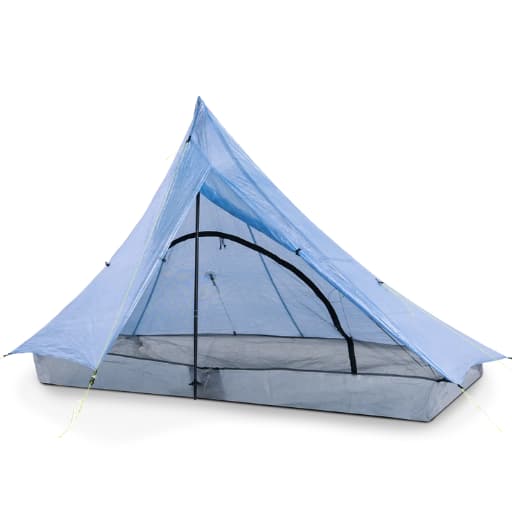
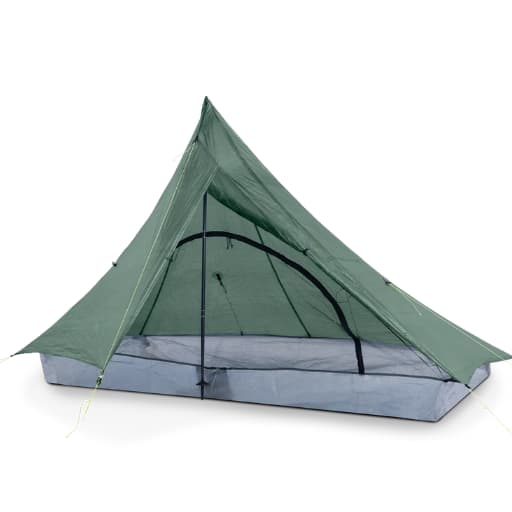
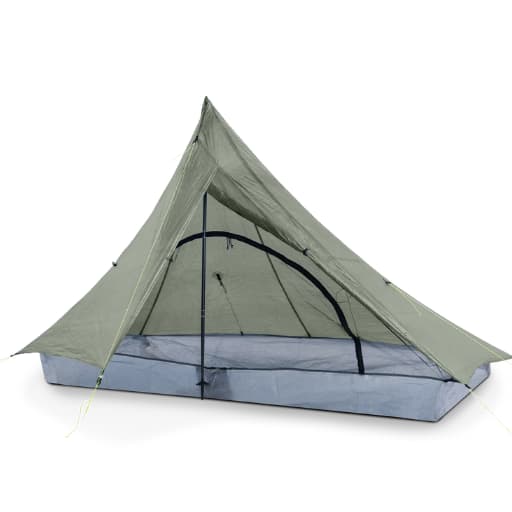
You need to understand what setup actually looks like at 8:47 PM after a 25-mile day. Your hands are cold. The light is fading. You’re hungry and tired. Maybe it’s drizzling.
The Altaplex uses a single trekking pole for structure. You already have that pole because you’ve been hiking with it all day. No separate tent poles to carry or lose. You take the pole, extend it to the right height, put the tent over it, stake out the four corners, adjust the guy lines, and you’re done. In good conditions, five minutes. In the dark with cold hands, maybe ten.
Here’s what beginners struggle with: guy lines. The tent needs them to maintain its shape and stability. That’s eight stake points total (four corners, four guys). In the dark, especially at first, you’ll fumble with this. By week two, it becomes automatic. By month two, you can do it half-asleep.
Setting up in the rain without getting your sleeping bag wet requires technique. Lay out the tent. Stake the back corner. Get the pole up and front staked. Now you have structure. Stake the sides. Then move your pack and gear inside before opening it. The tent acts as your mudroom. This works, but it requires more care than a freestanding tent where you can set up the structure, throw a rainfly over it, and then move stuff inside.
Different terrain presents different challenges. On soft ground (forest duff, sand), stakes hold great. On rocky terrain, you might need to tie to rocks or trees, which takes longer. On wooden tent platforms, you can’t stake at all, so you’re improvising with the guy lines. In snow, you can use stakes, but deadman anchors (buried sticks or stuff sacks) work better. None of this is a dealbreaker, but it’s more involved than driving stakes into dirt.
Weather Performance
The Altaplex is a single-wall tent. There’s no separate rainfly and inner tent. This saves weight but creates a fundamental reality: condensation.
Here’s what happens. Your body releases moisture while you sleep (about a pint of water vapor per night). In a double-wall tent, that condenses on the rainfly, away from you. In a single-wall tent, it condenses on the tent wall itself. On humid nights or in lush environments (the Smokies, the Whites, anywhere with morning dew), you’ll wake up to moisture on the tent walls. If you brush against it, you get wet.
This isn’t a failure of the tent. It’s physics. The Altaplex has ventilation points at the top and bottom to minimize this, but it can’t eliminate it. What this means practically: don’t let your sleeping bag touch the walls, and on humid nights, accept that you’ll wipe down condensation before packing up. For some people, this is a minor annoyance. For others, it’s a dealbreaker.
Wind stability is excellent for a tent this light. The pyramid shape sheds wind effectively. The low profile doesn’t catch gusts. But you need those guy lines properly tensioned. A poorly staked Altaplex in wind will collapse or flap all night. A well-staked one will ride out serious storms.
In heavy rain, the DCF tent fabric doesn’t absorb water like silnylon, so there’s no sag. Water beads off. The vestibule keeps rain away from your door. Seams are sealed from the factory, though you should check them before your hike.
Snow is where things get interesting. The steep walls shed snow reasonably well, but in heavy, wet snow, you’ll need to get out and brush it off periodically. The single-pole design means there’s no ridge pole to distribute snow load, so everything funnels to that center point. Many hikers in winter or shoulder season conditions carry an interior pole jack to prevent the pole from punching through the floor under snow load.
The Trade-offs
Let’s be direct about what you’re getting and what you’re giving up.
What you gain:
- Industry-leading weight for a fully enclosed shelter
- Packed size smaller than a Nalgene bottle
- Reasonable interior space for one person
- Excellent resale value if you decide to sell
- The psychological benefit of carrying an optimized kit
What you sacrifice:
- About $600-700 (this is real money for most people)
- Durability compared to heavier fabrics
- Ease of setup compared to freestanding tents
- Complete protection from condensation
- Spaciousness (you’re not inviting anyone over)
This tent makes sense if you’re committed to going light, willing to learn proper setup, and comfortable with single-wall trade-offs. It doesn’t make sense if this is your first-ever backpacking tent, you’re not sure you’ll finish the hike, or you want something bombproof that you don’t have to think about.
Durability Over Distance
DCF is tough for its weight, but it’s not indestructible. Over 2,000+ miles, here’s what typically happens:
The floor takes the most abuse. Rocks, sticks, abrasion from getting in and out. Many thru-hikers use a Tyvek footprint or polycro ground sheet under the tent. This adds 2-3 ounces but can double the life of your tent floor.
Guyline attachment points see stress. Check these weekly and reinforce with extra tape if you see wear starting.
The DCF itself can develop pinholes from repeated packing, especially if you’re not careful about keeping sticks and sharp objects away. A small pinhole doesn’t ruin the tent, but it can spread. Carry DCF repair tape (the actual stuff, not duct tape).
Most thru-hikers finish their hikes with the tent still functional. Some need to do minor repairs along the way. A few have catastrophic failures (usually from improper setup in wind or manufacturing defects). Zpacks’ warranty is decent, but getting a tent replaced mid-trail is complicated.
Compare this to a silnylon tent that might weigh twice as much but will likely outlast the DCF version. You’re trading longevity for weight. For a thru-hike, that trade usually makes sense. For a tent you’ll use for ten years on weekend trips, maybe not.
The Money Question
Let’s talk about the $665 price tag (current pricing may vary). That’s expensive. For context, you can get a solid ultralight silpoly tent like the Durston X-Mid 1 for under $300, or a budget option like the Lanshan 1 for around $120.
Here’s how to think about it: if you’re spending five months on trail, you’re spending roughly $4 per day on your shelter amortized over a thru-hike. That’s less than a hostel, less than a motel, less than camping fees in many places.
But if you’re not sure you’ll finish, or if $665 represents a significant chunk of your total budget, there are alternatives that do 80% of what the Altaplex does for 40% of the cost. The weight penalty is real but not hike-ending. Thousands of people have successfully thru-hiked with heavier gear.
The Altaplex holds its value well. If you finish your hike and sell it, you’ll likely recoup 50-70% of your cost if it’s in good shape. That’s better than most gear.
Bottom Line: Is This Tent Right For You?
Ask yourself these questions:
Are you committed to ultralight hiking? If you’re trying to get your base weight under 10 pounds, this tent fits that philosophy. If you’re carrying a 25-pound base weight, saving a pound on your tent won’t transform your hike.
Are you bothered by condensation? If morning moisture on your tent walls will make you miserable, consider a double-wall tent. If you can wipe it down and move on, you’ll be fine.
Is this your first long-distance hike? Many experienced hikers recommend starting with less expensive gear for your first thru-hike, then upgrading once you know your preferences. There’s wisdom in that. But there’s also something to be said for starting with gear you won’t want to replace.
Can you absorb the cost? Be honest. If this tent means you can’t afford to take extra town days or deal with unexpected expenses, that’s a problem. Your financial cushion matters more than your tent weight.
Do you value simplicity or optimization? Some people want gear they don’t have to think about. Others enjoy having a refined, efficient kit. Neither is wrong, but the Altaplex is built for the second group.
The Zpacks Altaplex is an excellent tent for what it is: an ultralight, solo shelter for experienced hikers who understand and accept the trade-offs of DCF and single-wall design. It’s not the right tent for everyone, and that’s okay. The right tent for you is the one that matches your priorities, your budget, and your willingness to adapt to its quirks.
Thousands of thru-hikers have walked thousands of miles under an Altaplex and loved it. Thousands more have chosen different shelters and loved those too. The gear matters less than your commitment to using it for five months straight. Choose thoughtfully, but don’t let gear decisions paralyze you. Get on trail. Figure out what works. Adjust as you go. That’s the actual hike.