This website uses affiliate links which may earn a commission at no additional cost to you. As an Amazon Associate I earn from qualifying purchases.
You’re hauling everything on your back for months. Your sleeping setup can make or break the entire trek. Thru-hikers obsess over ounces while trying not to freeze at night. It’s a brutal balance. The quilt market has exploded with choices for 2026, each claiming to be the lightest, warmest, most packable option you’ll ever stuff in your pack. Here’s what actually delivers when you’re 1,500 miles from home and the temperature drops.
What You Need to Know
Top ultralight quilts weigh between 11.8 and 31 ounces with 850 to 1000 fill power down, offering optimal warmth-to-weight ratios for long-distance trails. Most thru-hikers on the Triple Crown trails (AT, PCT, CDT) do well with quilts rated between 15°F and 30°F. Hydrophobic down treatments maintain insulation in damp conditions. Proper pad attachment systems prevent drafts and cold spots that ruin sleep and hurt your next day’s miles.
According to recent surveys of AT thru-hikers, 56 percent now choose quilts over traditional mummy bags, with Enlightened Equipment models accounting for over two-thirds of all quilts used on trail. The trend continues because quilts save weight and give you freedom of movement closer to sleeping in your own bed.
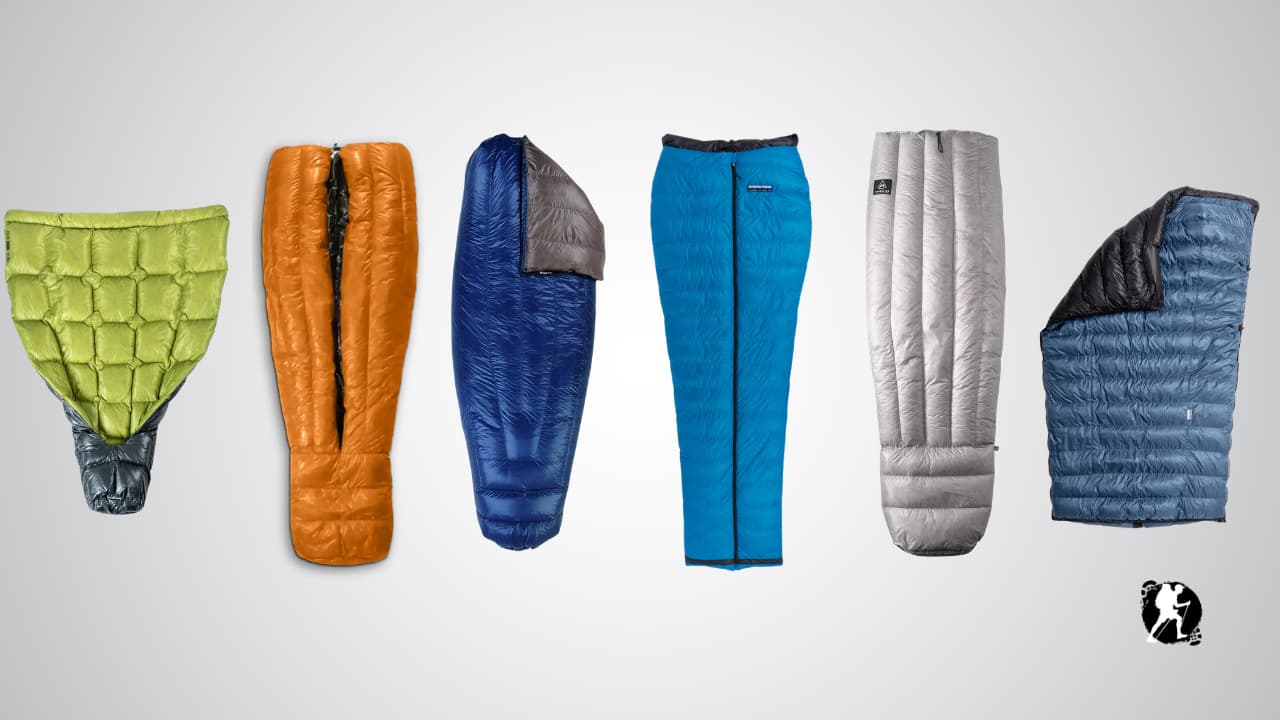
Our Top Thru-Hiking Quilt Picks
| Quilt | Best For | Weight | Temp Rating | Fill Power | Price |
|---|---|---|---|---|---|
| Enlightened Equipment Revelation | Best Overall | 19.18 oz | (0°-50°F) | 850/950 FP | $260-$560 |
| Katabatic Gear Flex 15 | Best Quality | 24.1-31.0 oz | 15°F | 850/900 FP | $409 |
| Hyperlite Mountain Gear 20° | Best Performance | 20.1 oz | 20°F | 1000 FP | $499 |
| Zpacks Solo Quilt | Best Stock | 11.8-25.5 oz | 10°F/20°F 30°F | 950 FP | Varies |
| NEMO Pulse 20/30 | Best Mainstream | 18 oz | 20°F/30°F | 1000 FP | $550-$580 |
| Feathered Friends Flicker UL Wide | Best Hybrid | 26 oz | 20°F/30°F 40°F | 950+ FP | $529-$609 |
Detailed Reviews
Enlightened Equipment Revelation
Best Overall
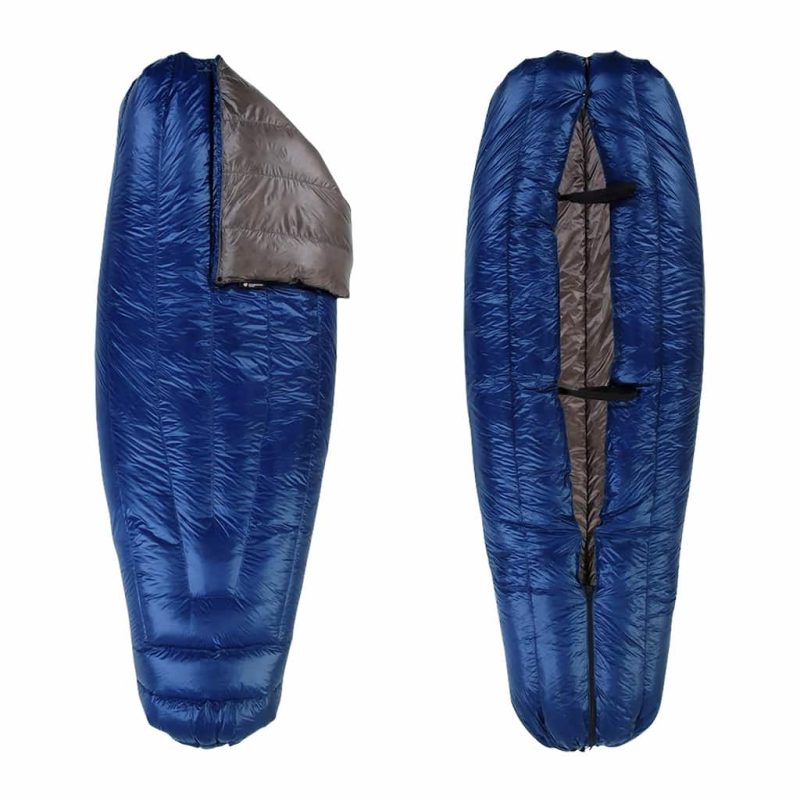
The EE Revelation has dominated the thru-hiking world for good reason. It’s the most popular quilt among AT hikers by a massive margin. You can use it as a blanket on warm nights or zip and cinch the footbox when temperatures drop. The 1/4 length zipper gives you options without adding much weight.
At 19.18 ounces for a 20°F regular/regular build with 850 fill power duck down, it won’t destroy your base weight. Choose 950 fill power goose down if you want to shave another ounce. The continuous U-shaped baffles prevent down migration and cold spots. Stock versions ship in about seven business days. Custom builds with your exact specs take around eleven weeks but let you dial in everything from temperature rating to width to fabric thickness.
The adjustable footbox works better than sewn options for dealing with temperature swings throughout a long hike. When nights are warm, open it completely. When it’s cold, cinch it tight with the shock cord and 20-inch zipper. The snap and drawcord neck closure seals in heat around your shoulders.
Price ranges from $260 to $560 depending on your choices. The regular width measures 54 inches, which some side sleepers find tight. Consider going wide if you move around at night or want to tuck the edges securely around you. Made in Winona, Minnesota (though stock quilt shells are imported before being filled domestically).
What works: Versatility, proven track record, customization options, stellar warmth-to-weight ratio, quick shipping for stock versions
What doesn’t: Can be drafty for cold sleepers, regular width feels narrow to some users, temperature ratings lean toward survival rather than comfort
Katabatic Gear Flex 15
Best Quality
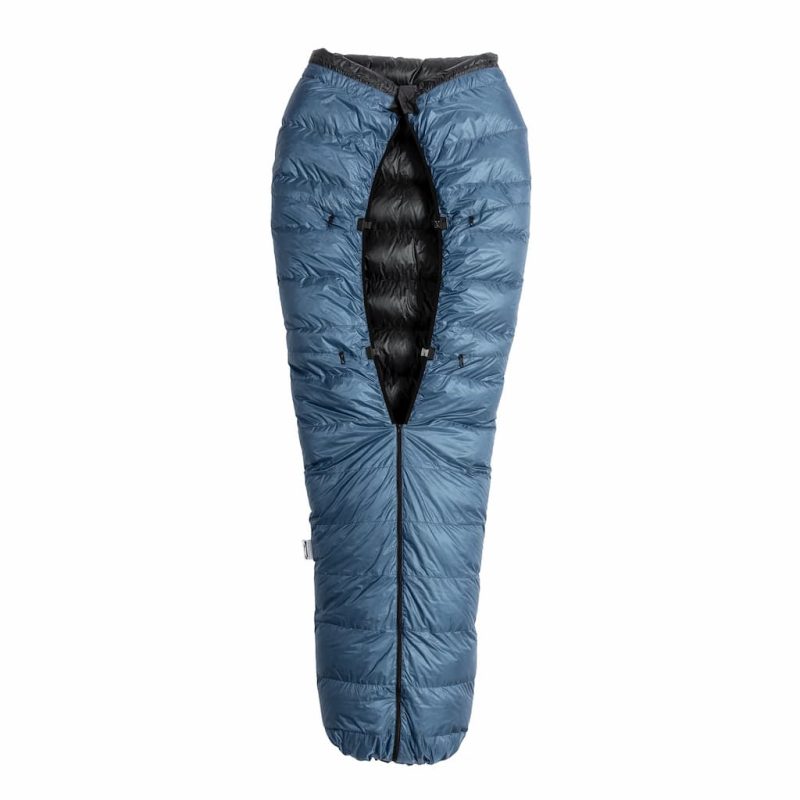
The Katabatic Flex 15 hits a sweet spot most thru-hikers chase: legitimate three-season warmth without the weight penalty. You’re looking at 24 to 31 ounces depending on size and whether you choose 900 fill power goose down or 850 fill power duck down. Both come with ExpeDRY hydrophobic treatment that keeps working when moisture creeps in.
The patented pad attachment system actually eliminates drafts. It’s more effective than the elastic straps most quilts use, though it takes practice to set up quickly. The differential cut maximizes loft where you need it. Continuous baffles let you shift insulation manually if one side needs more warmth.
That zippered footbox converts the whole thing into a blanket when temps climb above your rating. The Pertex Quantum ECO fabric feels smooth, not crinkly like cheaper shells. At $409, it’s expensive. But users consistently report staying warm at the advertised 15°F rating and appreciate the freedom of movement compared to mummy bags.
The draft collar wraps around your neck and improves warmth retention significantly. There’s even an internal stash pocket for keeping your headlamp or phone warm overnight.
What works: Effective pad attachment, draft collar, quality construction, accurate temperature ratings, can be used as blanket
What doesn’t: Price point, attachment system has a learning curve, down can migrate in vertical baffles, no way to try before buying
Hyperlite Mountain Gear 20-Degree
Best Performance
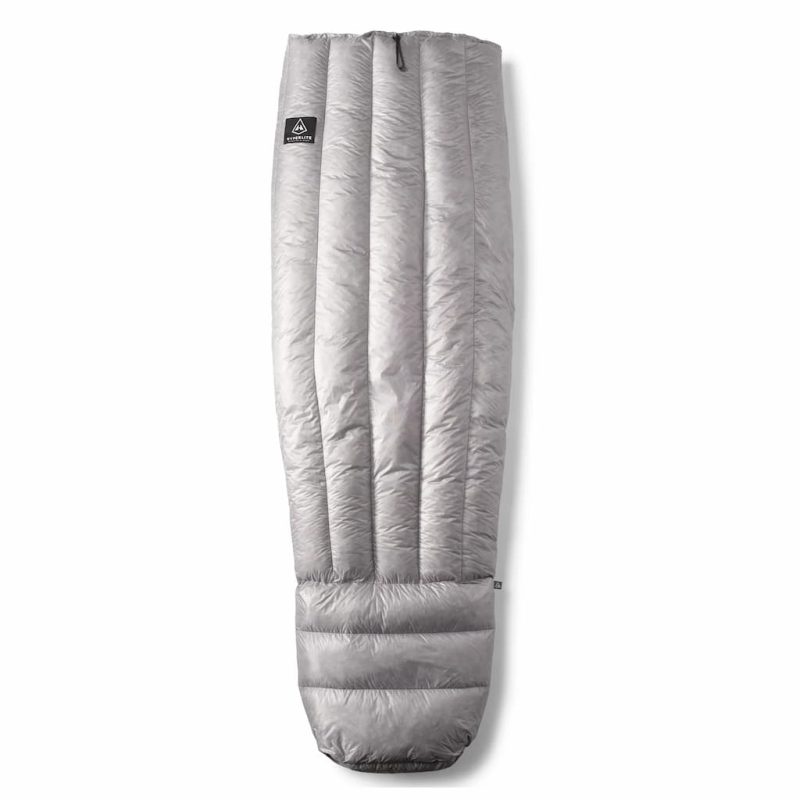
At $499 the HMG 20 Degree quilt is insane value, you’re getting 1000 fill power down that actually maintains loft when damp. The regular size weighs 20.1 ounces. Real thru-hikers have taken this to 12,000 feet in Yellowstone’s wet conditions and reported waking up warm. The 7D ripstop shell feels like fabric, not that crinkly plastic texture budget quilts have.
Three-dimensional baffles keep down distributed evenly. The sewn footbox prevents drafts at your feet. Twenty-nine verified users gave it 4.8 stars. You can pack it down small enough to forget it’s in your pack, clip it to your pad with the included straps, and stop worrying about condensation destroying your insulation.
The false bottom sleeping option lets you tuck extra insulation underneath you on particularly cold nights. Hyperlite makes bombproof ultralight gear, and this quilt follows that reputation. No frills, no gimmicks. Just effective insulation that works.
What works: Price-to-performance ratio, hydrophobic down, packability, proven in harsh conditions, straightforward design
What doesn’t: Limited customization, no temperature rating options, sewn footbox can’t be opened for ventilation
Zpacks Solo Quilt
Best Stock
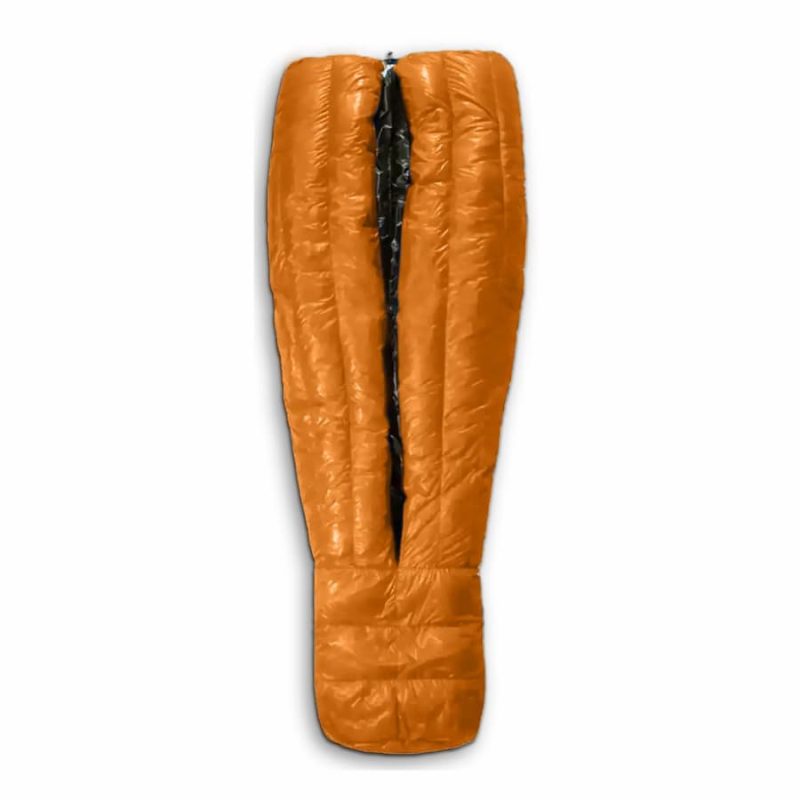
The Zpacks Solo quilt weighs as little as 11.8 ounces. You’ll actually forget it’s in your pack. Temperature ratings run from 30°F down to 10°F with loft measurements that matter for real-world warmth. The sizing choices are practical: Slim fits up to 50 inches, Standard handles 55 inches, and lengths stretch to 66 inches for tall hikers.
The attachment system gives you options. Tuck it under you, clip it at center, or attach it straight to your pad with the included hardware. It comes with a free dry bag. Users consistently mention how easy it repacks after a week of stuffing it carelessly.
Choose between 3/4 zip or full zip versions depending on how much ventilation control you want. The 950 fill power down with hydrophobic treatment maintains warmth even in damp conditions. Recent redesigns improved roominess and warmth based on thru-hiker feedback.
Some concerns exist about long-term durability with the ultralight 7D fabric. Handle it carefully at camp and it’ll last. The sewn footbox on standard models means no ventilation options compared to zippered designs.
What works: Weight, customization, included dry bag, multiple attachment options, easy to repack
What doesn’t: Durability concerns with ultralight fabric, quality control issues reported by some users, narrower than previous versions
NEMO Pulse 20/30
Best Mainstream
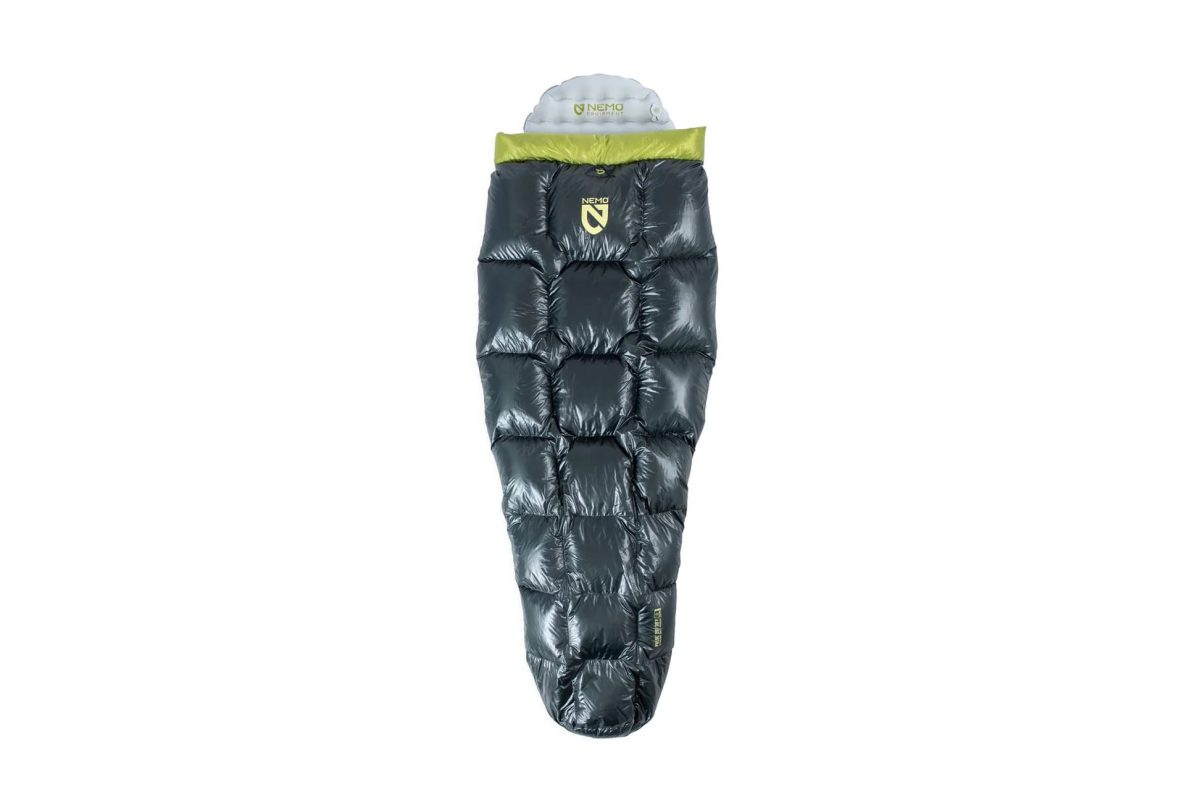
The Nemo Pulse Endless Promise uses 1000 fill power ExpeDRY down with gold infusion (claims about performance benefits are unclear, but the hydrophobic treatment definitely works). At 18 ounces for regular size, it’s featherweight. The Karo Step baffle construction cuts material usage by 45 percent while maintaining warmth.
Everything’s made from recycled polyester ripstop. The entire quilt is recyclable when you’re done with it. That matters if sustainability weighs on your conscience. The enclosed footbox keeps your feet warm without adding unnecessary weight elsewhere.
Choose between 20°F and 30°F temperature ratings with ISO comfort at 34°F. Runs $549.95 for regular, $579.95 for long. It compresses down to 2.3 liters, perfect for fastpacking or thru-hiking where pack space is precious.
The pad attachment straps work well enough. Not as bombproof as Katabatic’s system but functional for most sleepers. Ships off the shelf without waiting for custom builds.
What works: Sustainability, weight, packability, quick shipping, effective down treatment
What doesn’t: Price, limited temperature options, no customization, pad attachment less secure than competitors
Feathered Friends Flicker UL Wide
Best Hybrid
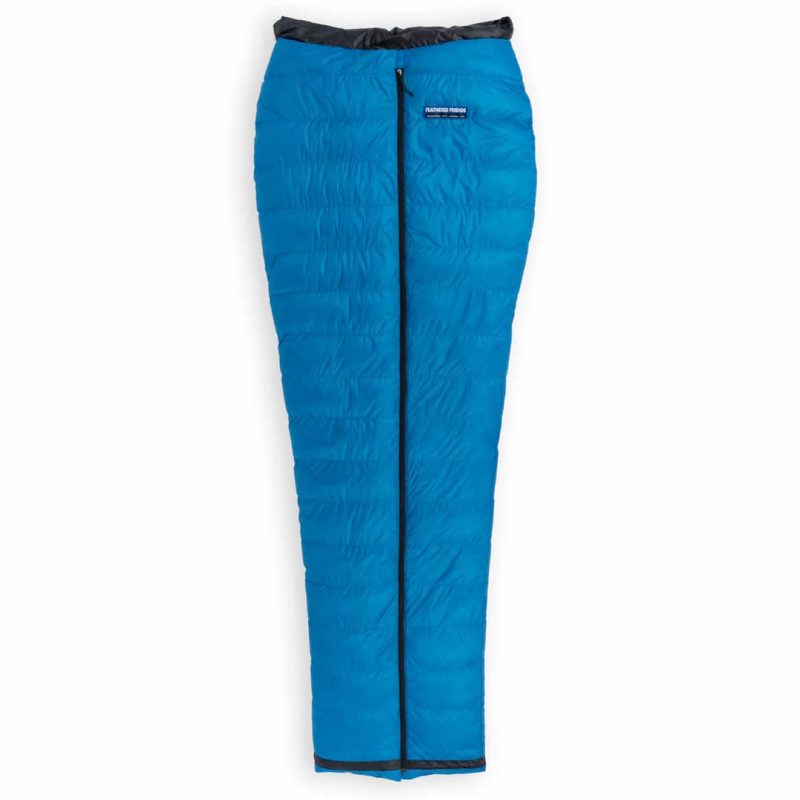
The 67-inch shoulder width on the FF Flicker makes this quilt stand out immediately. If you’re tired of feeling trapped or cold air sneaking in because regular quilts are too narrow, this solves it. Stuffed with 950+ fill power goose down, it weighs 26 ounces for the 20°F version.
Three temperature ratings (20°F, 30°F, 40°F) cover most thru-hiking scenarios. The full-length center zip lets you use it like a traditional quilt or a sleeping bag. Prices run $529 to $609. Each one’s hand-crafted in Seattle, so expect 8 to 12 days for shipping.
The Pertex Quantum Pro shell keeps weather out better than budget fabrics. The bottom drawcord and continuous baffles let you adjust warmth distribution. Four color options available.
This is technically labeled a “wide quilt sleeping bag” rather than a pure quilt. It functions more like a hoodless sleeping bag, which some thru-hikers prefer. The extra width means extra weight compared to minimal quilts, but for side sleepers or those who move around at night, it’s worth carrying.
What works: Width for comfort, quality construction, made in USA, versatile zipper design, premium materials
What doesn’t: Heavier than ultralight competitors, expensive, only available in one width (wide), longer shipping times
What to Consider Before Buying
Temperature Rating Matters More Than You Think
A 20°F quilt handles early spring, late fall, and high elevation summer nights on most thru-hikes. A 30°F works for late spring through early fall at moderate elevations. A 40°F is summer-only unless you’re hiking in consistently warm climates.
Here’s the catch: most quilts rate closer to survival temperature than comfort temperature. If the quilt says 20°F, expect to stay alive but not necessarily comfortable at that temperature. For survival think balled up tightly working to conserve heat.
Factor in at least 10 degrees warmer than the rating for actual comfort, especially if you sleep cold or are a new quilt user still learning how to prevent drafts.
Humidity and wind affect your perceived warmth dramatically. The same 30°F quilt that works perfectly on the dry PCT might leave you cold on the humid AT. Higher fill power (900+) helps combat this by maintaining loft in damp conditions.
Weight vs. Warmth Trade-Off
Every ounce counts when you’re hiking 2,600 miles. Ultralight quilts start around 18 ounces. Premium options like the Zpacks Solo can drop below 16 ounces. Warmer, more robust quilts push 25 to 31 ounces.
Higher fill power down (900 to 1000) gives you warmth without bulk. An 850 fill power quilt rated to 20°F might weigh 22 ounces while a 1000 fill power quilt at the same rating weighs 18 ounces. You’re paying more for that weight savings, but your shoulders will thank you after month three.
Consider packed size too. Some quilts compress to 5 liters or less. Others take up 8 liters. That space difference matters when you’re trying to fit everything into a 40-liter pack for a resupply stretch.
Down vs. Synthetic Insulation
Down dominates the thru-hiking quilt market for good reason. It has the best warmth-to-weight ratio, compresses smaller, and lasts longer than synthetic options. Fill powers from 850 to 1000 are standard. Higher numbers mean more loft per ounce of down.
The traditional downside is water. Wet down loses its insulating ability. Modern hydrophobic treatments (ExpeDRY, DownTek, HyperDRY) help significantly but aren’t perfect. Down still takes forever to dry on trail.
Synthetic insulation weighs more and packs larger but keeps working when soaked. If you’re hiking the AT during spring black fly season or the Pacific Northwest during shoulder season, synthetic might make sense. Most thru-hikers still choose down and just keep it dry.
Choose duck down or goose down based on fill power, not species. An 850 fill power duck down performs identically to 850 fill power goose down. Goose down typically achieves higher fill powers (950+) which matters for ultralight applications.
Look for RDS (Responsible Down Standard) certification if ethical sourcing matters to you.
Pad Attachment Systems
Drafts will ruin your sleep faster than a rock under your back. Pad attachment systems prevent quilts from shifting and creating cold gaps when you move at night.
Most quilts use elastic straps with clips that loop around or attach to your sleeping pad. Some systems work better than others. Katabatic’s patented system eliminates drafts most effectively but requires practice. Enlightened Equipment’s straps are simpler and work well for most people.
Adjust tension based on your pad width. Wider pads need looser attachment. Narrower pads need tighter straps to prevent gaps. Some quilts include multiple attachment points for different pad sizes.
Test your system at home before hitting the trail. Learning how to prevent drafts takes practice. Most new quilt users struggle initially because they’re used to mummy bags that seal automatically.
Footbox Design Changes Everything
Sewn footboxes trap warmth better and weigh less. They’re perfect if you run cold or primarily camp in temperatures near your quilt’s rating. The downside: no ventilation when temperatures spike.
Zippered footboxes with drawcords give you options. Open them completely on warm nights to dump heat. Cinch them tight when temperatures drop. This versatility matters more on long thru-hikes where you encounter huge temperature swings.
Some quilts like the Revelation have a 1/4 length zipper that opens the footbox but not the entire quilt. Others like the Katabatic Flex have full-length zippers that let you lay the quilt completely flat as a blanket.
Width matters too. A 40-inch footbox fits most people. Side sleepers or folks with larger feet might want 44 inches. Too narrow and your feet push against the fabric, compressing insulation and creating cold spots.
Fabric Durability
Ultralight fabrics (7D to 10D) save weight but tear more easily. Handle your quilt carefully at camp. Clear your sleeping area of sharp rocks and sticks before laying it down. These fabrics require more babying than heavier 20D options.
Pertex Quantum and similar high-quality shells balance weight and durability better than budget ripstop. They feel softer against your skin too. The difference becomes obvious after weeks of continuous use.
Check for reinforcement at high-wear points like pad attachment areas and footbox corners. Quality quilts use double-stitched seams and stronger fabric patches where stress concentrates.
Customization and Lead Times
Stock quilts ship within days. Custom quilts take weeks or months during peak season (spring before thru-hiking season starts). Order early if you need specific features.
Customization lets you dial in exactly what you need: temperature rating, length, width, fill power, fabric weight, colors, draft collars, overfill options. It also adds cost and complexity.
For first-time quilt buyers, stock options from proven brands make more sense. Once you understand how quilts work and what features matter to you, customization becomes valuable.
Price Reality Check
Budget quilts start around $260. Premium customs push $600. You’re investing in gear that determines whether you sleep well for 2,600 miles. Cheap out here and you’ll regret it.
That said, expensive doesn’t always mean better. Some cottage brands charge premium prices without corresponding performance improvements. Look for proven track records among actual thru-hikers, not marketing hype.
Sales happen. Enlightened Equipment, Hammock Gear, and others run periodic discounts. REI’s members-only sales apply to brands like NEMO. Watch for deals if your timeline allows patience.
Final Thoughts
The Enlightened Equipment Revelation remains the default choice for thru-hikers because it works and ships relatively quickly. If you’re new to quilts, can’t go wrong with a stock 20°F Revelation in regular/wide for most three-season hiking.
The Katabatic Flex 15 or the FF Flicker costs more but delivers premium performance with better draft protection. Worth it if you’re committed to quilts and want the best system available.
For pure weight savings, the Zpacks Solo or NEMO Pulse get you below 20 ounces without sacrificing warmth. The Hyperlite Mountain Gear 20-Degree offers the best value at $499 with no-nonsense 1000 fill power performance.
One last option for those who prefer massive customization and prints, look at the UGQ Bandit for amazing optins and decisions but know it will have a long lead time as they are hand made once ordered.
Whatever you choose, your quilt needs to match your sleeping style, typical camping temperatures, and trail conditions. Test it before your thru-hike. Learn the attachment system. Figure out how to prevent drafts. Your sleep quality determines your hiking performance more than almost any other gear choice.
Six solid options sit before you. Each one works for thousands of miles if you pick the right match for your needs. No gimmicks. Just proven gear that gets the job done when you’re cold, tired, and 1,500 miles from home.