
This website uses affiliate links which may earn a commission at no additional cost to you. As an Amazon Associate I earn from qualifying purchases.
When I got back into backpacking and started assembling lighter gear, I never thought about tent fabrics. I found what worked at the price I could afford. Then I started reading about the Zpacks Duplex and discovered Dyneema Composite Fabric (DCF). I wanted to understand why thru-hikers were so passionate about it.
DCF tents cost 2-3 times more than similar silnylon shelters, yet they weigh about half as much. That weight savings pulls in distance hikers. For me, it’s perfect for trail life since it’s fast to set up and ultralight to carry for thousands of miles. Let’s explore whether DCF makes sense for your thru-hike.
What Makes Dyneema Composite Fabric Different
Dyneema fiber was originally developed for sailboat sails because it’s incredibly strong for its weight. Combined with its waterproof properties, this makes it ideal for lightweight, durable tents. The material consists of ultra-high molecular weight polyethylene fibers laminated between thin polyester films, creating a non-woven fabric that’s 15 times stronger than steel by weight.
However, DCF comes with challenges. It’s expensive to produce, difficult to machine, and nearly impossible to dye, limiting color options to translucent white, blue, light green, and black (though black makes tents unbearably hot in sun).
Why DCF Gear Costs More
The high price reflects both material and manufacturing challenges. DCF requires specialized equipment for sewing that differs from traditional textile machinery. This keeps production limited to companies with significant financial backing willing to invest in specialty tools. The end product costs much more than standard tents, limiting the buyer pool and making many mainstream brands avoid DCF entirely.
Production has slowly expanded as more manufacturers acquire the right equipment, but it remains a substantial investment that keeps DCF in the premium category.
4 Key Benefits of DCF for Thru-Hikers
Dramatic Weight Reduction
The primary advantage is weight. A silnylon tent typically weighs around 3 pounds while a comparable DCF shelter weighs 1 pound or less. Single-wall DCF tents are the gold standard for ultralight shelters. Over thousands of trail miles, this difference significantly impacts your knees, feet, and overall endurance. The weight savings also allows for a lighter, smaller backpack.
Fully Waterproof
DCF excels in heavy rain. While the fabric itself is waterproof, manufacturers must address the tiny holes created by sewing. They seal tents by taping seams, hot bonding DCF layers together, or applying sealant to fully protect you in the heaviest downpours. Unlike silnylon, which absorbs moisture and grows heavier when wet, DCF sheds water immediately and dries quickly.
No Stretch or Sag
DCF maintains its shape in all conditions. It won’t stretch and sag like waterlogged silnylon, keeping your tent stable in high winds without constant adjustment throughout the night. This no-stretch property means you won’t wake up to a drooping shelter after rain.
Superior Tear Resistance
DCF offers excellent tear resistance for its weight due to the extremely tough fibers used in construction. However, the material can catch and puncture, though tears won’t run like traditional nylon fabrics. The sewn seams are the most vulnerable connection points, so take care when setting up and breaking down your shelter to avoid catching corners on anything sharp.
Field repairs are straightforward with needle and thread or DCF tape. I’ve patched my tent several times on trail with good results.
Important Drawbacks of DFC Tents to Consider
Premium Pricing
Any DCF tent requires serious investment. Expect to pay a minimum of $600 for the shelter alone, not including stakes. This puts DCF out of reach for many hikers. However, if you have the budget, the weight savings and durability justify the cost for long-distance hiking.
Translucent Material and Privacy
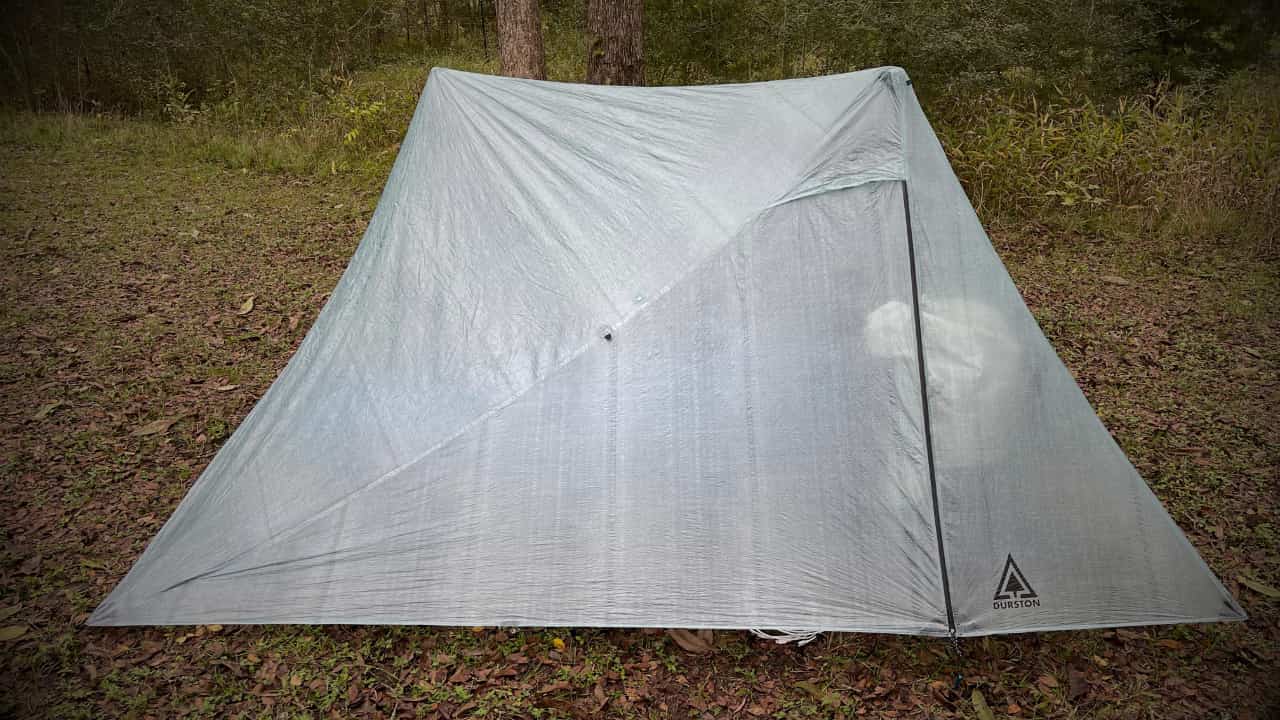
DCF is translucent, especially in light colors. While not transparent, the material reveals silhouettes when backlit by a headlamp. This provides minimal privacy and can be uncomfortable when camping near others. For many hikers, this lack of privacy is a dealbreaker beyond even the cost.
Wind Noise
DCF can be loud in high winds, creating a crinkling sound that disrupts sleep. Some manufacturers use thicker DCF to dampen noise, but it remains an issue for light sleepers. Proper pitching helps minimize noise, but you’ll still hear more than with silnylon.
Condensation Management Required
Most DCF tents are single-wall designs, meaning condensation is a significant concern. Without proper ventilation, moisture from your breath accumulates on the tent walls. Single-wall DCF tents need ample ventilation to avoid condensation, so pitch with good airflow by leaving doors partially open when possible and maintaining a gap between the ground and tent bottom. In high humidity with minimal wind, even well-ventilated DCF tents can develop condensation.
Trekking Pole Dependency
Many DCF shelters require trekking poles as the primary support structure, which means you can’t use your poles for other purposes (like making a chair) without taking down your tent. If you want to day hike, you’ll either need extra poles or have to pack up your shelter. This isn’t a problem for everyone, but it’s worth considering if you don’t typically carry poles or like using them for multiple purposes.
How Long Will a DCF Tent Last?
The lifespan depends on care and usage intensity. Most manufacturers estimate DCF tents will last at least one full 2500+ mile thru-hike, and many hikers get multiple thru-hikes from the same tent. DCF tents typically last approximately two-thirds as long as silicone-coated woven fabric tents under similar use due to potential pinhole formation from creasing and abrasion.
Critical care requirement: Roll your DCF tent loosely rather than stuffing it. Hard creasing stresses the mylar film layers and creates pinholes that reduce lifespan. Store your tent completely dry in an uncompressed state to maximize longevity.
With proper treatment, your tent can serve well beyond a single thru-hike. The key is understanding these limitations and caring for your gear appropriately.
Is the Investment Worth It for Thru-Hiking?
When you’re on trail for 5+ months, your shelter becomes home. Most homes cost far more than $600-700 and aren’t remotely portable. For a thru-hike attempt, a DCF tent justifies the investment. Having a safe, comfortable, dry, bug-free place to sleep makes an enormous difference when you’re living outdoors for months.
The durability means lower long-term costs despite the high upfront price. While not everyone can afford DCF, those who can and treat their tent with care will find it’s a worthwhile investment. Ultimately, what matters is what works best for you and what you’re willing to spend for trail comfort.
If you consider 120 nights on trail for a thruhike on the AT, PCT, and CDT then a $600 DCF tent actually works out to a tiny $5 a night cost which hould it make it through two thru-hikes this cost would then lower to $2.50.
Top DCF Shelter Recommendations
The major players for thru-hiking DCF tents are Zpacks, Durston Gear, Hyperlite Mountain Gear (HMG), Tarptent, and Gossamer Gear.
Zpacks Duplex Lite: The ultimate ultralight option at under 15 ounces, making it the world’s lightest fully enclosed two-person tent. The Duplex has been a thru-hiker favorite for years, offering excellent weather protection and spacious interior despite minimal weight.
HMG Unbound 2P: Designed with feedback from global testers, the Unbound offers reliability and versatility. It features robust 0.8 oz/sqyd DCF construction that’s more durable than lighter-weight options, though this adds a few ounces.
Durston Gear X-Mid Pro 2: Represents peak ultralight design with stormworthy X-Mid geometry in a single-wall DCF package. The X-Mid design includes two doors and vestibules, a rare luxury that improves livability significantly.
Gossamer Gear The Whisper: An excellent solo option with strong condensation management and good ventilation design. At 9.8 ounces, it balances weight and livability well for single hikers.
Tarptent Aeon Li: A premium solo shelter with meticulous attention to weather resistance details. Its high-angle sides shed snow and rain effectively while the single-pole design keeps setup simple.
DIY DCF Projects
If you want to make your own gear, RipStopByTheRoll is the premier source for DCF and other materials. You’ll need to buy the material, cut it to shape, seal seams, and construct the entire shelter yourself. It’s demanding work but can be rewarding when you finish your first project.
Making DCF gear requires patience and precision since the material doesn’t behave like traditional fabrics. If DIY isn’t your interest, plenty of cottage manufacturers produce high-quality DCF gear ready to use.
Final Thoughts
DCF offers incredible advantages that make it among the best materials for ultralight backpacking and trekking pole tents. If you can accept the cost, translucency, and wind noise, there’s no better material for strength-to-weight ratio, waterproofing, and tear resistance. For thru-hikers logging thousands of miles, the weight savings alone can make the difference between finishing strong and struggling with joint pain.
Do you have experience with DCF tents? Share your thoughts in the comments below!